Why body treatments have become the largest market in dermatology
December 10, 2025
For many years, aesthetic dermatology focused on the face. This was where patients invested their time, money, and expectations. But this landscape has changed rapidly, profoundly, and irreversibly.
Today, body treatments are the new frontier in dermatology, driven by metabolic changes, contemporary aesthetic standards, and a growing number of patients who want to treat their entire body, not just their face.
In Fellow Digital, our medical community focused on clinical practice, scientific discussion, and management & marketing, we held a session on this topic with Dr. Cyro Hirano and Dr. Denise Barcelos.
During the session, Dr. Cyro highlighted this shift: there is substantial unmet demand, a new patient population presenting to the clinic, and a gap in technical training in this field. Modern dermatology has already recognized that the body is not an extension of the face, but an independent, complex area with extensive clinical opportunities.
This is why body treatments in dermatology are no longer a trend. They are a reality in clinical practice.
And this is where the greatest growth potential lies in the coming years.
The new body-treatment patient: seeking rapid results, demanding, and shaped by the GLP-1 era
The most dramatic market shift came with the widespread use of GLP-1 injection pens. Thousands of patients lose weight rapidly and, along with fat loss, present to the clinic with:
- Severe, early-onset skin laxity;
- Volume loss in key areas (arms, abdomen, buttocks);
- Structural collapse of the subcutaneous tissue;
- Generalized aesthetic disproportion;
- Reduced self-esteem and an urgent desire for correction.
The post-GLP1 patient is among the most challenging and, when appropriately treated, among the most loyal.
These patients seek more than aesthetic improvement: they seek recovery, functionality, proportion, and confidence in their bodies.
And this is the first reason for the rapid growth in dermatologic body treatments: the body has changed, and dermatologists need to keep pace with this new physiology.
From the face to the body: dermatology finds an unsaturated market
The facial treatment market has always been saturated with techniques, technologies, and courses. The body-treatment market has not. The body is an area in which almost everything still needs to be defined, studied, standardized, incorporated into protocols, and mastered.
Few dermatologists have in-depth expertise in:
- Body biostimulation;
- Safe volumetric repositioning (reposicionamento volumétrico);
- Hybrid protocols for improving skin firmness;
- Deep-tissue technologies (IR, advanced radiofrequency, body CO₂ treatments);
- Management of metabolically associated skin laxity (flacidez metabólica);
- Regenerative approaches to subcutaneous tissue.
As a result, those who master this field quickly distinguish themselves. Body treatments currently represent dermatology's largest untapped market.
Why body treatments have become so complex and so valuable
The face has smaller muscles and compact anatomical regions and requires subtle adjustments. The body, in contrast, requires a more comprehensive assessment:
- Large volumes;
- Important functional differences;
- More extensive anatomical risk zones;
- Tissues with different response characteristics;
- Metabolic influences on outcomes;
- Direct effects of lifestyle;
- The need for combination protocols.
Dr. Cyro Hirano emphasizes a central point: the body does not respond to a single technique. It responds to a strategy.
Dermatologists who insist on treating the body with a facial treatment approach (an isolated stimulus, an isolated technology) will make errors.
What works is a layer-based approach:
- Regenerate: Prepare the tissue, restore the fascia, reduce inflammation, and reorganize collagen.
- Restore: Replace volume, improve distribution, and restore three-dimensional proportion.
3. Reinforce: Provide biostimulation, improve firmness, and maintain long-term results.
This rationale is the foundation of body treatments in dermatology in the contemporary perspective presented at Changeover.
The areas with the greatest increase in demand, and why
Demand for body treatments has not increased uniformly.
There are key areas of rapid growth:
- Abdomen: post-GLP1 “metabolic weight cycling” (efeito sanfona metabólico) has produced unprecedented skin laxity, with a thin dermis and depleted subcutaneous tissue.
- Arms: aesthetic concerns + hormonally associated loss of tone + structural thinning.
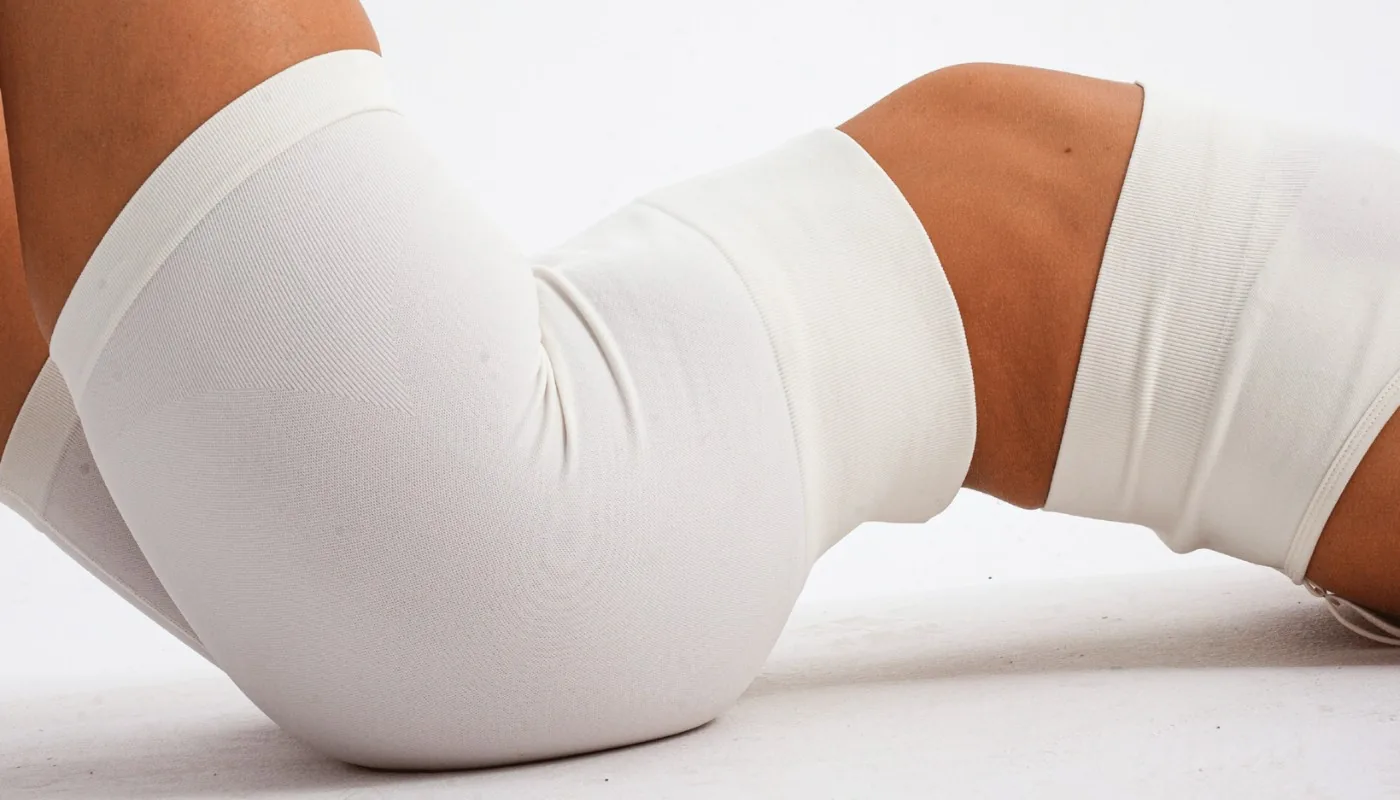
- Buttocks: The buttocks are the “new chin”: body identity, femininity/masculinity, posture, and attractiveness. Volumes, safety, anatomical risk zones, and biostimulation intersect in this region.
- Medial thighs: the most difficult region to treat, with complex skin laxity and fragile supporting tissue.
- Lumbar flank: a new aesthetic frontier influenced by social media, fashion, and sports. Dermatologists who master these regions become recognized experts.
Technologies and biostimulation: the body responds better to combinations
Cyro emphasizes: body monotherapy is no longer an option. The body responds to a combination of stimuli:
- Deep-penetrating infrared for tissue retraction and reorganization;
- Advanced radiofrequency for contraction and thermal precision;
- Body biostimulation for structural reconstruction;
- A blend of hyaluronic acid + biostimulation for volume replacement;
- Complementary technologies for vascularization and the microenvironment.
The clinical reasoning has shifted from “Which technology should be used?” to: “What biological sequence does this body need to restore its integrity?”.
This is the new approach to body treatments in dermatology.
Conclusion: body treatments are a new reality, and dermatologists need to take responsibility for this field
Patients already understand that:
- A youthful face is incongruous with an aged body;
- Rapid weight loss depletes structural support;
- Body skin laxity affects self-esteem more than facial rhytides;
- The body represents identity, functionality, and expression.
Regenerative dermatology has opened a new era: the body is no longer secondary. It has become central. And those who master this new field—with technical expertise, perspective, and safety—will assume leadership positions in the coming years.
Questions & Answers | Body Treatments in Dermatology
1. What are the main causes of body skin laxity today?
The combination of rapid weight loss (GLP-1), age, and structural loss in the subcutaneous tissue.
2. Is there a single protocol for all patients?
No. The body requires three-dimensional assessment and a combination strategy.
3. Are biostimulators effective for the body?
Yes, and they play a central role, particularly when combined with deep-tissue technologies.
4. Can I treat the body with technology alone?
No. Combining it with structural stimulation is what produces lasting results.
5. Why is the body-treatment market growing so rapidly?
Because patient demand has changed, and dermatology is now keeping pace with this new physiology.
Would you like to join the medical community leading the future of regenerative dermatology?
This content is only part of what is shared during Changeover Fellow Digital sessions.
If you are a dermatologist or a physician practicing cosmetic dermatology or aesthetic medicine, you can join us! Simply click the link below for information on how to participate.

Looking for a physician who applies the protocol? Find a member physician