Botulinum Toxin in Men: An Anatomical Strategy and Preservation of Masculinity in Aesthetic Dermatology
May 20, 2026
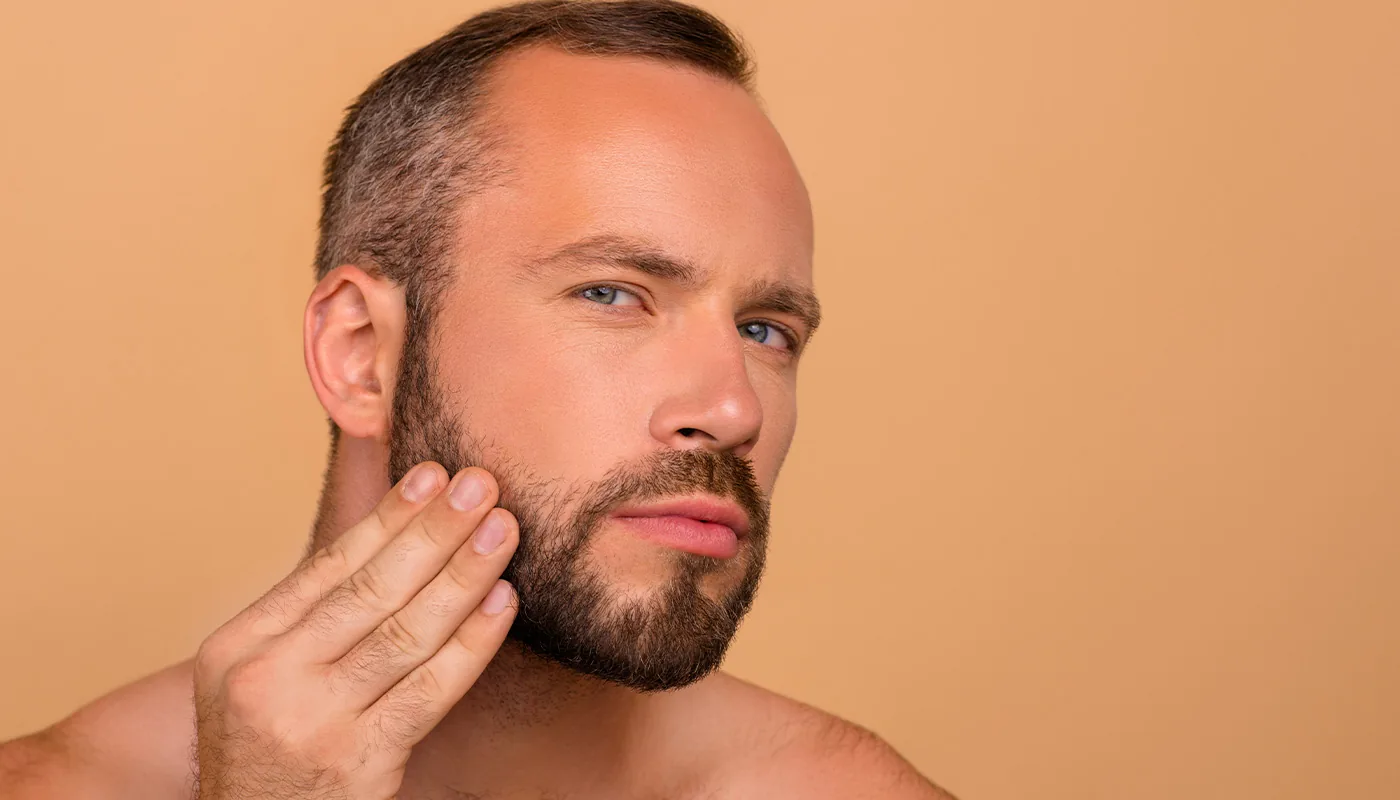
In daily practice, botulinum toxin treatment in men is both the most frequent aesthetic procedure and the one most likely to elicit “I did not like it; I will not do it again” when the approach is formulaic.
At Changeover Experience, Dr. Cyro Hirano delivered a lecture on male patients and emphasized:
“In men, we need to be much more cautious with botulinum toxin than in women because of functional anatomy, muscle strength, and one detail that changes everything in clinical practice: male patients generally tolerate any sign of feminization or radical change poorly.”
The clinical objective, therefore, is not paralysis. It is individualization: maintaining eyebrow shape, modulating muscle activity without eliminating it, and reducing the risk of undesirable effects that men perceive as aesthetic failure—and a reason to discontinue treatment.
Botulinum toxin treatment in men is not a “female protocol with a higher dose”
Three practical considerations alone justify a different treatment plan for men:
1. More injection sites: the standard approach is to distribute injections across more sites, with fewer units per site, to adjust contour and avoid focal areas of excessive neuromuscular blockade.
2. A broader/stronger muscle → a tendency toward a higher dose, but without losing precise control of the outcome (a high dose must not mean rigidity).
3. Strenuous exercise shortens the duration of effect: he emphasizes that most men exercise and that “the effect lasts less time in every patient who engages in physical activity.” This changes expectations, maintenance, and preprocedure communication.
The clinical implication is clear: you need a plan sufficiently effective to control muscle strength, but sufficiently precise to preserve masculinity and expression.
The aesthetic priority in men: maintaining eyebrow shape
Cyro identifies this as one of the most important considerations: “maintaining eyebrow shape.” In men, the major concern is lateral eyebrow arching, the “Spock brow.” He identifies the source of the error: assuming that the lateral region has “little musculature” and therefore leaving it untreated—which, in men, frequently results in unwanted elevation/arching when the rest of the frontalis relaxes and the lateral portion retains its activity.
He emphasizes a simple but decisive change here: prioritizing small injections in the lateral portion of the frontalis to prevent arching.
Rather than thinking in terms of a “fixed injection map,” consider vector control: your injections need to preserve the contour of the male eyebrow while preventing lateral muscle activity from becoming dominant.
Distribution and microdosing: multiple sites, fewer units per site
In the lecture, he presents a rationale that serves as a conceptual model: use multiple injection sites, distributing the dose to maintain control and individualization. The total frontalis dose is “considerable,” but despite the high dose, the intention is to avoid an immobile appearance—the total dose is distributed strategically.
To translate this into a practical rule, use three assessments before deciding “how much”:
• Corrugator supercilii / procerus / frontalis strength (direct assessment during movement)
• Desired facial expression (how much movement the patient finds acceptable)
• Risk of lateral eyebrow arching (the eyebrow elevating when it should not)
The lecture also presents a management principle that reduces the need for corrective treatment: start with a lower dose and increase it later—a stepwise strategy for adjustment without causing regret.
Alopecia and a receding hairline: “undertreatment” that produces a residual upper forehead rhytid
According to Dr. Cyro, one detail that can make a difference is the relationship between the frontalis and the hairline, which is more recessed in many men. He warns of the risk of undertreating the frontalis, particularly when injections are placed inferiorly while an upper band remains active: the result is a rhytid above the treated area that causes considerable concern for the patient—and with progressive alopecia, this becomes even more visually apparent.
Male Patient_ Transcrip…
He summarizes this with a specific recommendation: sometimes it is necessary to place injections higher and consider three treatment rows rather than two to avoid a residual rhytid in the upper region.
Male Patient_ Transcrip…
Quick checklist (to decide whether to place frontalis botulinum toxin injections higher)
• Does the hairline / alopecia leave the forehead more exposed?
• Does the patient recruit the upper frontalis to express surprise?
• Is there an upper forehead rhytid that persists when you simulate inferior neuromuscular blockade?
If so, the risk of a residual band increases—and the lecture transcript is clear about the practical consequence for the perceived outcome.
“Spock brow” and lateral eyebrow arching: prevention is preferable to correction
Cyro calls lateral eyebrow arching caused by the frontalis the “worst problem” in men and directly associates it with failure to treat the lateral frontalis. His stated recommendation is pragmatic: do not rely on the notion of an “insertion with little musculature” to justify leaving it untreated; use small lateral injections for prevention.
Male Patient_ Transcrip…
This relates to something every dermatologist has encountered: male patients have a low tolerance for an “aesthetic defect.” Slight arching prompts “I look strange.” Therefore, prevention through lateral control is part of the treatment plan, not a minor detail.
Toxin selection and diffusion: when they enter clinical decision-making
In the case example, he mentions using a toxin with a smaller diffusion field to permit “more advanced” injection sites (“mais avançados”) and increase the capacity for individualization.
Male Patient_ Transcrip…
The point here is not the brand—it is diffusion and control: in men, when the aim is to preserve contour and modulate activity through small adjustments, the predictability of diffusion may influence your injection-site strategy.
The periorbital region: a major concern for men—and where toxin does not address everything
Cyro comments that, among procedures that concern men, “the eye” is particularly prominent, and suggests that when starting with botulinum toxin, it is worth focusing on the periorbital region. However, he also demonstrates that some fine rhytides and eyelid skin laxity do not respond to toxin alone, requiring consideration of adjunctive device-based treatments when indicated (he mentions examples involving plasma in selected cases).
The clinical interpretation here is that toxin is the “number one treatment” in male aesthetics, but the treatment plan for the upper facial third in men cannot default to monotherapy. It must recognize the limitations of the neuromodulator in treating the eyelids and skin quality to avoid promising an unattainable outcome.
Communication that prevents treatment discontinuation: masculinity, a natural appearance, and “few visits”
The lecture includes guidance that affects both outcomes and patient retention: men tend to want a natural appearance, preservation of masculinity, and few visits. He also recommends asking when a patient desires feminization (there are exceptions, but the vast majority do not want it).
Practical implications for botulinum toxin treatment in men:
• Align expectations regarding duration of effect, particularly in patients who exercise
• Explain why “starting with a lower dose and adjusting” is a strategy, not uncertainty
• Reinforce that the objective is improvement without radical change
Frequently Asked Questions | Botulinum toxin in men
1) Why does botulinum toxin treatment in men generally require more injection sites?
Because the rationale presented is individualization with control: distributing injections across more sites, often with 1–2 U, helps modulate muscle strength and preserve contour rather than producing abrupt areas of neuromuscular blockade.
2) Does the dose always need to be higher in men?
The lecture identifies a tendency toward higher doses because of broader/stronger muscles, but emphasizes that “more is better” does not apply: the total dose requires a distribution strategy and an objective of avoiding complete immobility.
3) How can lateral eyebrow arching (“Spock brow”) be prevented in male patients?
Cyro recommends prioritizing small injections in the lateral portion of the frontalis to prevent arching, rather than assuming there is little musculature in that region and leaving it untreated.
4) What changes when alopecia and a more recessed hairline are present?
He warns about undertreatment of the frontalis and the need to place injection sites higher or plan additional treatment rows (e.g., three) to avoid a residual upper forehead rhytid that causes considerable concern for the patient.
5) Does strenuous exercise really reduce the duration of toxin effect? How should this be addressed during the consultation?
In the lecture, he states that the effect tends to last less time in patients who engage in physical activity and suggests counseling patients from the outset to align expectations and maintenance planning.

Looking for a physician who applies the protocol? Find a member physician