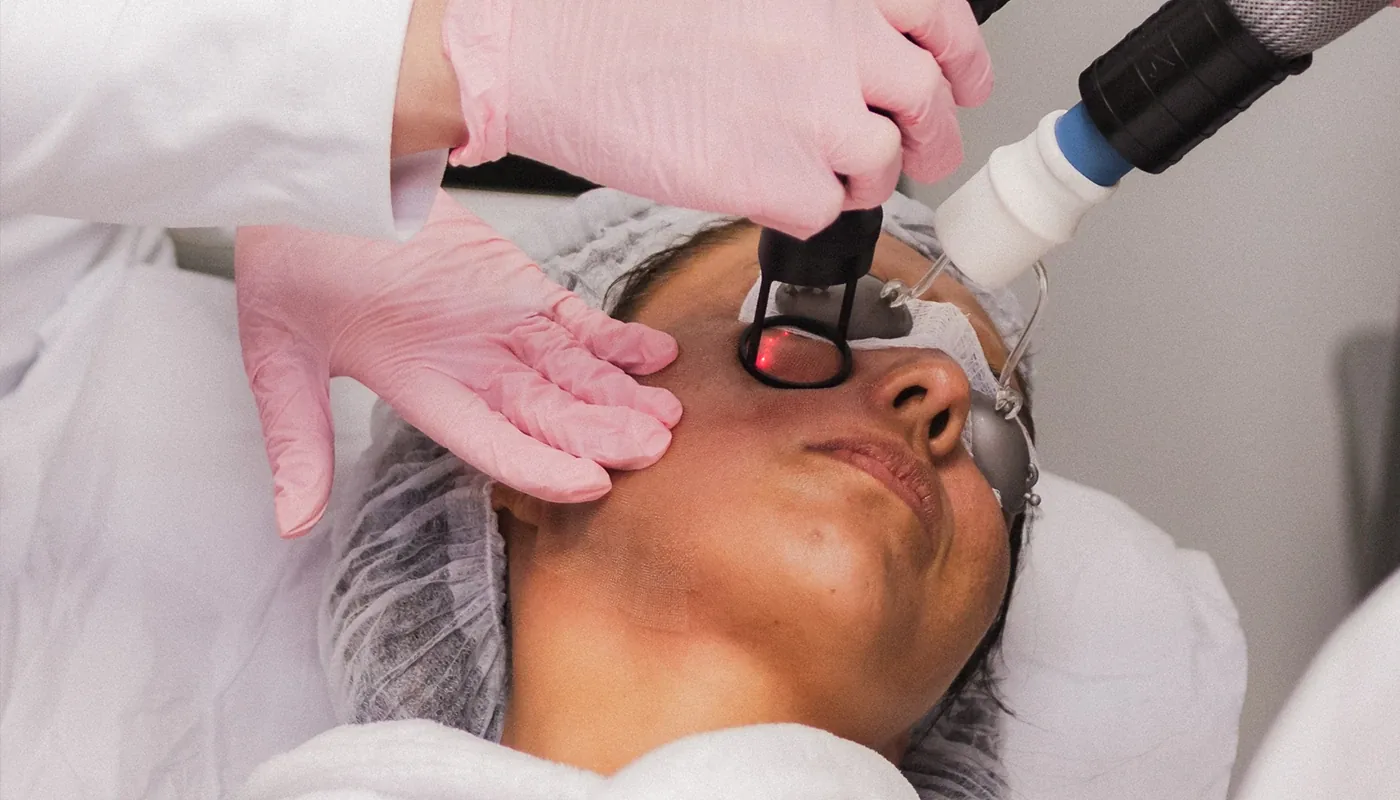
The four pillars of skin quality: firmness, surface, tone, and radiance (glow)
January 21, 2026

For a long time, aesthetic skin assessment was fragmented. Rhytides, hyperpigmentation, skin laxity, and texture were treated as isolated problems, each associated with a specific technique.
Contemporary dermatology, however, has advanced toward a more sophisticated understanding: skin quality is not an aesthetic detail; it is an integrated biological state.
At Changeover Experience, Dr. Cyro Hirano presented a concept that now underpins international consensus statements: skin quality can be understood and treated through four fundamental pillars: firmness, surface, tone, and radiance (glow).
When these pillars are balanced, the skin conveys health, vitality, and youthfulness. When one fails, the overall balance is disrupted.
Understanding these four pillars completely changes how dermatologists assess, plan, and perform treatments.
What skin quality is and why it has become central to modern dermatology
Skin quality is not synonymous with skin that looks attractive only under makeup or favorable lighting. It refers to the functional and structural capacity of the skin to reflect health, regardless of age, gender, or the procedure performed.
Skin of good quality has:
- Organized dermal architecture;
- A functional extracellular matrix;
- An intact barrier;
- Uniform coloration;
- Balanced light reflection.
Thus, improving skin quality is now more relevant than correcting individual signs of aging. This concept shifts the focus from technique to clinical reasoning.
Pillar 1: Firmness — the structural foundation of skin quality
Firmness is the deepest pillar of skin quality. It is not limited to the absence of visible skin laxity, but encompasses the skin's ability to maintain tension, elasticity, and support.
Firmness depends on three inseparable components:
- Elasticity, linked to elastic fiber integrity;
- Tension, related to collagen and dermal architecture;
- Deep tissue hydration, which maintains tissue function and resilience.
When this triad is lost, the skin collapses. It does not merely develop laxity; it loses the ability to support the overlying layers. No superficial correction compensates for the absence of structural firmness.
For this reason, protocols that disregard dermal regeneration fail in the medium term.
Pillar 2: Surface — texture, pores, and uniformity
The surface is the most visible pillar of skin quality. It encompasses:
- Texture;
- Regularity of the stratum corneum;
- Pore appearance;
- Cutaneous microrelief.
An irregular surface fragments light reflection and compromises the perception of health, even in young skin. A common error is attempting to treat the surface aggressively without considering the biological state of the tissue.
The lecture reinforces a key point: the surface improves consistently only when the skin has undergone prior regeneration. Otherwise, any improvement is temporary and frequently accompanied by residual inflammation.
Pillar 3: Tone — homogeneity as a marker of balance
Skin tone concerns more than the presence or absence of evident hyperpigmentation. It reflects the balance among:
- Melanogenesis;
- Inflammation;
- Vascularization;
- Barrier integrity.
Skin with an uneven tone conveys systemic imbalance, even in the absence of a formal diagnosis of melasma and hyperpigmentation.
Treating tone without controlling inflammation and respecting tissue biology increases the risk of recurrence. Thus, tone is a pillar that requires a regenerative approach, not merely the use of depigmenting agents.
Pillar 4: Radiance — the final expression of skin quality
Radiance is frequently misunderstood. It is neither oiliness nor an immediate cosmetic effect. True radiance is the skin's ability to reflect light uniformly, a direct result of the internal organization of the tissue.
Radiance can be compared to the aurora borealis: a visible phenomenon that exists only because of the complex, invisible organization underlying it.
Without firmness, a regular surface, and a uniform tone, there is no true radiance. Thus, radiance cannot be created artificially. It emerges when the other three pillars are balanced.
Why treating only one pillar does not work
One of the major errors in clinical practice is selecting only one pillar as the focus. Treating only firmness, only hyperpigmentation, or only texture produces partial and unstable results.
The modern approach to skin quality requires an integrated assessment. Dermatologists need to answer questions such as:
- Does the skin have the structure to support this treatment?
- Is subclinical inflammation compromising tone?
- Is the surface responding or merely being injured?
- Is there a genuine capacity to develop radiance?
Without this assessment, treatment becomes technical but not strategic.
Skin quality as a method, not a trend
The concept of skin quality is not a trend. It arises from scientific consensus statements and long-term clinical observation. It guides the selection of technologies, active ingredients, and treatment sequences, but above all, it guides the physician's reasoning.
Within the framework presented at Changeover, improving skin quality means:
- Regenerating before refining;
- Establishing structural support before correcting;
- Respecting biology before accelerating results.
This paradigm shift distinguishes transient treatments from sustainable results.
Conclusion: Skin quality is a clinical assessment, not a visual effect
Firmness, surface, tone, and radiance are not isolated aesthetic categories. They are different expressions of the same biological system, which responds in an integrated manner to stimuli, the cutaneous microenvironment, and the regenerative state of the skin.
When dermatologists learn to assess the skin through these four pillars, they stop treating isolated signs and begin treating quality. The focus shifts from the immediate effect to developing tissue that is more functional, resilient, and capable of sustaining results over time.
This change in perspective redefines clinical practice. Instead of asking “what should be corrected now,” physicians begin asking “what does this skin need to function better.” At this point, protocols cease to be technical and become strategic.
In modern dermatology, skin quality is not the final refinement of treatment; it is the foundation. It is precisely this foundation that supports more predictable results, greater patient confidence, and genuine durability of therapeutic outcomes.
Questions & Answers | Skin Quality
Is skin quality purely aesthetic?
No. It is a marker of skin health and function.
Can I improve radiance without treating firmness?
Not sustainably. Radiance depends on the internal structure of the tissue.
Does every patient need treatment targeting all four pillars?
Yes, although to different degrees. They always coexist.
Do technologies replace the clinical assessment of skin quality?
No. They assist, but clinical reasoning remains central.
Is skin quality more important than treating rhytides or hyperpigmentation?
It is the foundation. When skin quality improves, rhytides and hyperpigmentation begin to respond better.

Looking for a physician who applies the protocol? Find a member physician