What Biohacking Is in Modern Medicine and Why Every Patient Already Practices It Without Realizing It
January 07, 2026

The term biohacking is often associated with technology, devices, futuristic protocols, and extreme interventions. However, this superficial interpretation obscures the most important fact: biohacking is not a recent trend—it is an unrecognized practice that all patients already engage in daily, even without knowing it.
In one of the lectures delivered at Changeover Experiente, our annual event for dermatologists and physicians practicing cosmetic dermatology and aesthetic medicine, Dr. Denise Barcelos and Dr. Cyro Hirano clearly demonstrated that biohacking in modern medicine begins not with sophisticated devices, but with basic decisions that modulate cellular function, systemic inflammation, tissue regeneration, and biological aging.
When physicians understand this, their perspective on treatment, adherence, and clinical outcomes changes completely.
Biohacking is not technology; it is biological regulation
At its core, biohacking means intentionally intervening in one's own biological system to improve performance, health, and longevity.
This can occur through simple or advanced methods, but the principle is always the same: modulating the internal environment to support repair and regeneration.
In modern medicine, biohacking moves beyond an alternative concept to become a framework for clinical reasoning. It involves:
- Activation of beneficial metabolic pathways;
- Reduction of chronic inflammation;
- Optimization of mitochondrial function;
- Hormonal regulation;
- Alignment of biological rhythms;
- Stimulation of cellular regeneration.
All of this occurs independently of advanced technology. This is the central point of this discussion: every patient already practices biohacking on their own body every day.
Why does every patient already practice biohacking without knowing it?
Patients practice biohacking when they:
- Sleep poorly or sleep well;
- Eat at misaligned times or follow their circadian rhythm;
- Exercise or remain sedentary;
- Live under chronic stress or regulate cortisol;
- Obtain appropriate sunlight exposure or spend the day under artificial light;
- Maintain or destroy their intestinal microbiota;
- Induce subclinical inflammation or support regeneration.
Each of these choices activates or inhibits specific genetic pathways, such as FOXO, AMPK, and sirtuins, cited in the lecture as central regulators of longevity.
In other words, patients do not choose WHETHER to practice biohacking; they choose HOW to practice it.
The role of biohacking in modern regenerative medicine
Regenerative medicine introduced a fundamental change: stimulating the skin is not enough if the body is not prepared to respond.
Biostimulation, lasers, technologies, and active ingredients are fully effective only when the biological microenvironment is favorable. Otherwise, the result is:
- A weak response;
- Prolonged inflammation;
- Longer recovery time;
- Frequent recurrences;
- Patient frustration;
- Deterioration of the physician–patient relationship.
This is precisely where biohacking enters modern medicine: preparing the biological environment so that treatment can work.
Sleep: the most powerful and most neglected biohacking intervention
Sleep is the most important biohacking intervention available. During deep sleep, the following occur:
- Physiological release of melatonin;
- Cellular repair;
- Collagen reorganization;
- Immune modulation;
- Hormonal balance;
- Activation of regenerative genes.
When patients sleep poorly, no aesthetic treatment protocol can compensate for this deficit.
A common mistake is believing that “the body adapts.” It does not adapt; it develops disease without overt manifestations.
Circadian rhythm: when to eat, sleep, and treat matters more than what
One of the lecture's strongest points was demonstrating that biological timing is as important as biological stimulation.
Biohacking in modern medicine respects:
- Meal timing;
- The overnight fasting window;
- Appropriate light exposure;
- Alternation between stimulation and rest.
Eating the right food at the wrong time induces inflammation.
Treating the skin out of alignment with biological rhythms reduces the response.
Physicians who disregard timing compromise outcomes, even with proper technique.
Hormesis: mild stressors that promote regeneration
Another central concept in modern biohacking is hormesis. This involves applying controlled low-level stressors that activate repair mechanisms.
Examples cited in the lecture include:
- Moderate physical exercise;
- Temperature variations;
- Photobiomodulation;
- Controlled regenerative stimuli.
These stimuli do not cause injury; rather, they condition the biological system to become stronger.
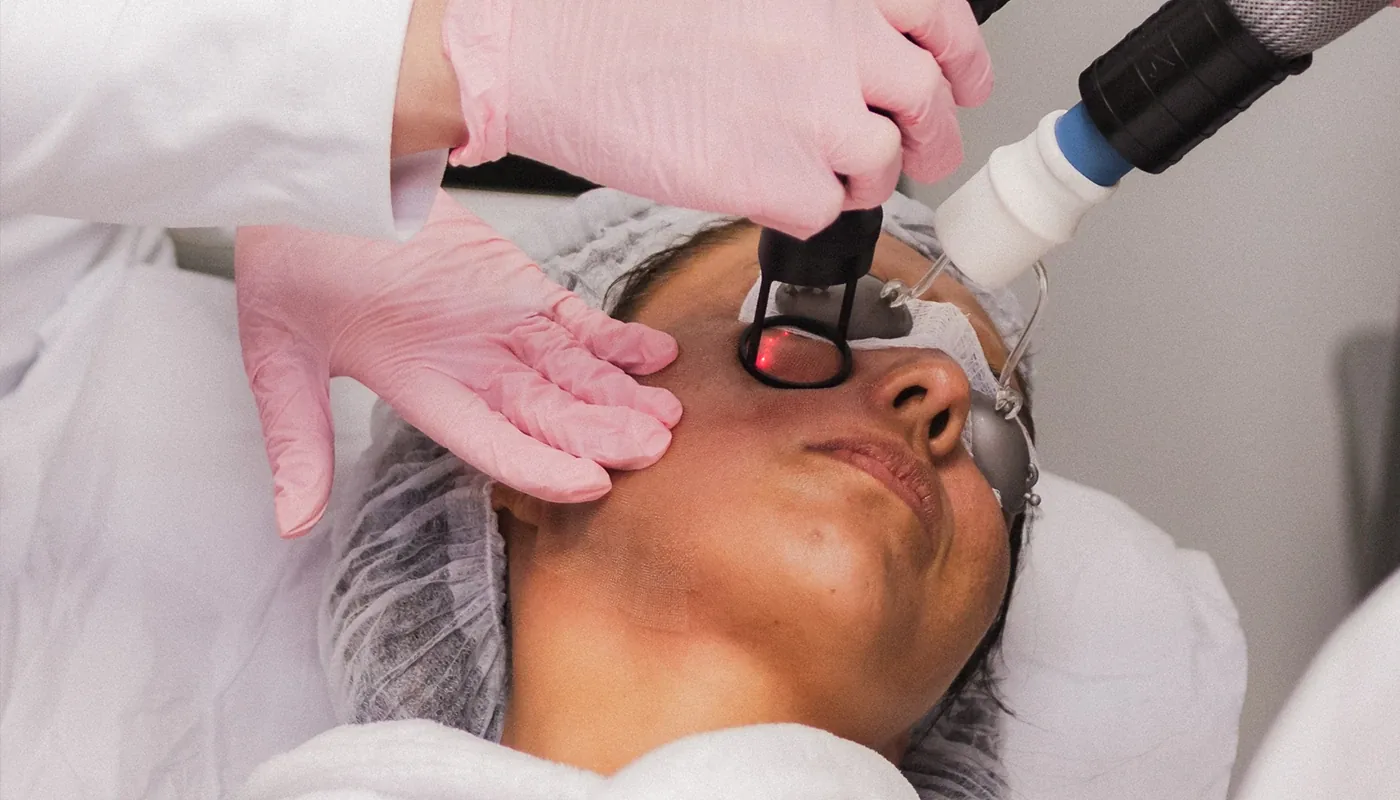
This is the same principle that explains why laser treatment promotes regeneration when used appropriately and induces inflammation when used excessively.
Technology in biohacking: a means, not an end
Incorporating technology into biohacking has significantly expanded physicians' ability to observe the body's functioning.
Wearable devices, sleep-monitoring devices, tools for measuring heart rate variability, LED photobiomodulation, and digital monitoring platforms provide data previously unavailable in traditional clinical practice.
These technologies enable identification of patterns in stress, sleep quality, circadian rhythm, metabolic recovery, and inflammatory response. They do not create health, but reveal what is happening in the body. This distinction is fundamental.
The risk begins when technology is mistaken for a solution. No wearable device compensates for poor sleep. No LED neutralizes an inflammatory state sustained by chronic stress, irregular eating patterns, and a lack of routine. No device replaces behavior.
In modern medicine, technology should be understood as a tool for awareness, not a therapeutic shortcut. It serves to educate patients, improve adherence, make the impact of daily choices visible, and enable precise adjustments to clinical management. Used this way, it enhances outcomes. Used as a substitute for habits, it creates frustration.
A mature approach to biohacking does not delegate health to devices. It uses technology to refine decisions, personalize strategies, and align patients with their own care process.
At this point, physicians move beyond prescribing to providing guidance, translating data into feasible, sustainable actions consistent with human physiology.
The physician as an interpreter of biohacking
The physician's primary role in biohacking in modern medicine is not to prescribe trends, but to translate science into feasible daily practice.
Patients do not need an extreme protocol. They need coherence, consistency, and understanding. When physicians assume this role, they:
- Improve adherence;
- Reduce frustration;
- Increase the predictability of outcomes;
- Strengthen the therapeutic relationship;
- Provide genuine health benefits, not merely aesthetic improvement.
Conclusion: biohacking is awareness applied to medicine
Biohacking is not a trend, a luxury, or futurism. It is biological awareness applied to clinical practice.
Modern medicine can no longer treat the skin in isolation from the body, and patients can no longer be treated as passive recipients of procedures.
When physicians and patients understand that everything they do daily shapes the outcome, treatment ceases to be episodic and becomes transformative.
This is biohacking in modern medicine. It already occurs every day, even when no one notices.
Questions & Answers | Biohacking in Modern Medicine
Is biohacking an alternative approach?
No. It is science applied to biological regulation and is already part of modern medicine.
Does every patient need technology to practice biohacking?
No. Sleep, nutrition, biological rhythms, and stress are the primary biohacking interventions.
Does biohacking improve aesthetic outcomes?
Yes, because it prepares the body to respond better to stimuli.
Should physicians prescribe biohacking?
Physicians should guide, educate, and integrate—not impose extreme protocols.
Does biohacking replace dermatologic treatments?
No. It enhances and sustains outcomes.

Looking for a physician who applies the protocol? Find a member physician