CO₂ laser: why it is considered the most versatile laser in contemporary dermatology
May 10, 2026
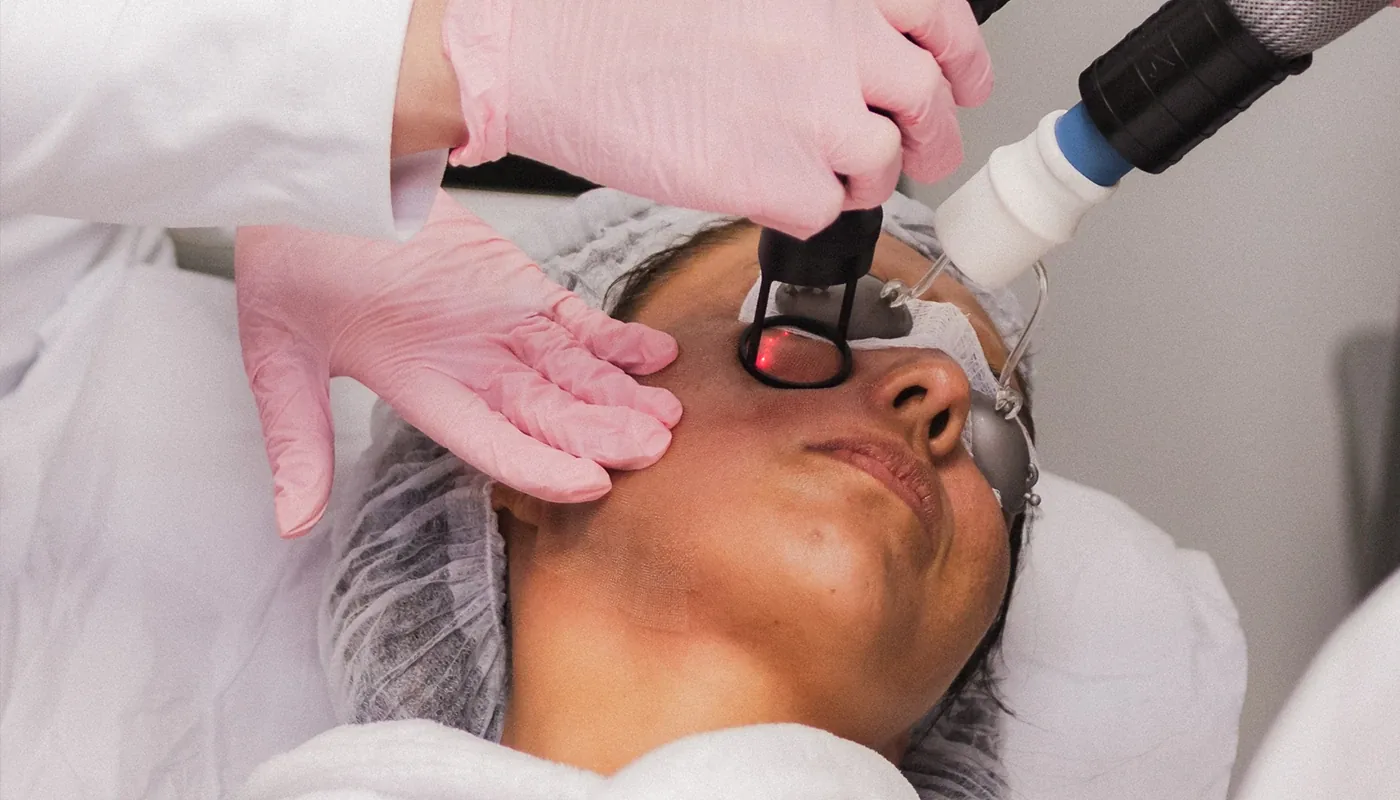
For decades, the CO2 laser was associated almost exclusively with aggressive resurfacing and substantial results, but with prolonged recovery time. However, that perspective belongs to the past.
Technological advances have transformed CO₂ into the most versatile, sophisticated, and adjustable tool in contemporary dermatology, capable of supporting both regeneration and precise delivery of active ingredients, treating photodamage, scars, and skin laxity, addressing field cancerization, and even being incorporated into hybrid protocols.
At Changeover Experience, our annual in-person event, Dr. Cyro demonstrated that CO₂ is not merely a technology; it is a therapeutic ecosystem.
It therefore now occupies a central role in regenerative dermatology.
Whereas other technologies operate within highly specific applications, the CO2 laser interacts with multiple skin layers, activates epigenetic pathways, reorganizes the extracellular matrix, and predictably modulates inflammation.
Its strength lies in the precision of thermal injury, controlled depth, and ability to reorganize tissue without destroying its functional integrity.
This combination of factors explains why it has become the most versatile laser in dermatology today.
Structural versatility: a single laser, multiple intensities and objectives
The principal distinguishing feature of the CO2 laser is its range of energy delivery.
It allows the dermatologist to vary depth, density, fluence, pulse shape, treatment area, and fractionation pattern.
This flexibility allows for a range of applications:
- Mild resurfacing
- Deep regenerative stimulation
- Targeted drug delivery
- Hybrid treatments (macrochannels + microchannels)
- Gentle approaches for sensitive regions
Whereas other lasers serve specific niches, CO₂ can be adjusted to perform equally well in multiple clinical settings.
That is why, in Cyro's view, CO₂ is “the technology that accompanies the dermatologist throughout their career.”
CO₂ as a central technology in regenerative dermatology
The major scientific shift in recent years has been the understanding that the laser acts not only through tissue removal, but primarily through biological modulation.
When used in a controlled manner, CO₂ activates:
- Expression of repair-related genes
- Growth factors
- Extracellular matrix reorganization
- Collagen remodeling
- Delayed anti-inflammatory stimuli
- Epigenetic pathways associated with regeneration
The CO2 laser combines precise thermal injury with the ability to recruit fibroblasts and renew cutaneous architecture, something nonthermal technologies do not achieve at the same depth.
This response is predictable, stable, and sustained—ideal for regenerative protocols.
CO₂ with cold-pulse delivery (pulso frio): the era of safe regeneration with shorter recovery time
CO₂ with cold-pulse delivery (pulso frio) was an advance that drastically reduced collateral thermal injury.
Its advantages include:
- Lower risk of post-inflammatory hyperpigmentation (PIH);
- Less diffuse injury;
- Faster wound healing;
- More targeted and less destructive stimulation;
- A more balanced regenerative response.
This broadens the range of patients who can be treated with CO₂—including those with sensitive skin, a higher risk of pigmentation, and more delicate treatment areas.
This technological refinement established CO₂ as the most comprehensive regenerative tool in modern dermatology.
Drug delivery with the CO₂ laser: true, deep, and efficient channels
There is no true comparison between drug delivery achieved with CO₂ and that achieved with other technologies.
CO₂ creates true microchannels with adjustable depth, capable of delivering antioxidants, exosomes, polynucleotides, low-molecular-weight hyaluronic acid, and advanced regenerative active ingredients
These channels traverse barriers that microneedling, Tixel, radiofrequency, and superficial ablative techniques cannot penetrate.
It is the most efficient method when the objective is to improve texture, accelerate wound healing,
enhance biostimulation, treat deep hyperpigmentation, and modulate inflammation.
It represents a major advance in clinical practice.
The CO₂ laser in the treatment of field cancerization and actinic keratoses
Another important point: CO₂ is not used solely for aesthetic purposes. It has an established role in:
- Premalignant lesions;
- Actinic keratoses;
- Areas of extensive photodamage;
- Oncologically safe rejuvenation.
In recent studies cited in the lecture, CO₂ reduced actinic keratoses by up to 75%. This is an unmatched response rate.
This reinforces its versatility: aesthetic treatment, regeneration, and health are addressed by the same technology.
Advanced applications: hybrid CO₂ and macrocoring
Hybrid CO₂ is an advance that combines:
- Deep channels (macrocoring);
- Superficial stimulation;
- Three-dimensional reconstruction;
- More pronounced tissue contraction.
It is one of the most modern approaches for:
- Advanced skin laxity;
- Complex scars;
- Acne sequelae;
- Areas of structural collapse.
This type of delivery is possible only because CO₂ allows energy modulation with millimeter precision.
Conclusion: one laser, multiple eras of dermatology
The CO₂ laser has spanned the phases of dermatology:
- resurfacing (the 90s)
- fractional treatments (2000)
- regenerative treatments (2015+)
- epigenetic treatments (2022+)
And it continues to evolve. Today, no technology simultaneously combines depth, precision, versatility, safety, epigenetic modulation, drug delivery capability, and aesthetic, functional, and oncologic applications.
It is therefore the most versatile laser in contemporary dermatology.
Questions & Answers | CO₂ Laser
Is CO₂ safe for all skin phototypes?
With contemporary use (cold-pulse delivery [pulso frio]) and appropriate parameters, yes, with meticulous adjustment.
Does the CO₂ laser always leave the skin highly sensitive?
No. The new generation has significantly reduced recovery time and the risk of thermal injury.
Is drug delivery with CO₂ superior to microneedling?
Yes. The channels are deeper, more precise, and more stable.
Can CO₂ treat actinic keratoses?
Yes. And with response rates far higher than those of traditional methods.
Can CO₂ be combined with biostimulatory treatments?
Yes, and it is one of the most potent combinations in regenerative dermatology.

Looking for a physician who applies the protocol? Find a member physician